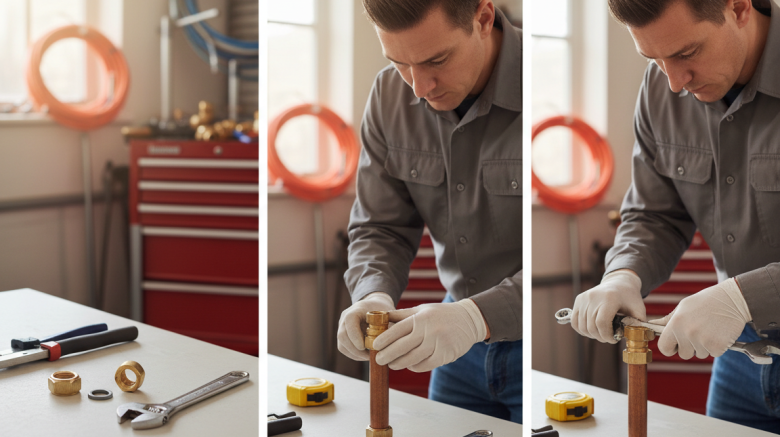
Imagine if one small fitting could provide both safety and long-term durability in your plumbing system? This issue is key to choosing the right components for any project.
Check out 1/2 Inch Female To 3/8 Male Adapter
The Compression Outlet Lead Free Brass Max-Adapter is a key product offered by Installation Parts Supply. As a dependable plumbing wholesale distributor, we supply this fitting for strong, watertight connections.
Constructed from lead-free brass, this adapter complies with strict potable water safety requirements. Its durable construction is intended to provide extended service life and dependable protection against corrosion.
This versatile adapter is suitable for many different uses. From residential water supply lines to hydraulic systems, it offers dependable performance time after time.
This adapter is stocked by Installation Parts Supply as part of our broad plumbing supply selection. We are a trusted source for contractors and DIY users looking for reliable fittings.
This introduction highlights the adapter’s role in modern plumbing. The next sections will take a closer look at its features, technical details, and recommended applications.
Introduction: Your Reliable Source For Plumbing Supplies
Whether you are a professional or a DIY enthusiast, choosing a dependable plumbing supplier is a crucial starting point. The right supplier helps give your project a strong foundation from day one.
Installation Parts Supply serves as a premier wholesale distributor for all your plumbing component needs. We focus on supplying the fittings and parts that help plumbing systems perform efficiently.
We are committed to offering high-quality, code-compliant products for every type of project. From residential improvements to large-scale commercial work, we carry the right item for the task.
Choosing reliable fittings is especially essential when dealing with drinking water systems. Even one weak connection can affect both safety and system performance.
That’s why our extensive inventory covers a vast range of tube sizes and types. You can find the exact specifications required for your application without delay.
Working with an experienced supplier provides significant value. Installation Parts Supply pairs expert technical guidance with competitive pricing for better service.
Our product selection rigorously adheres to stringent US plumbing standards. That includes an emphasis on lead-free brass parts built for safety and durability.
We have earned a reputation as a trusted authority in the plumbing supply field. Customers trust us to deliver correct information and the proper parts for the job.
Whether the work involves new installations, repairs, or routine upkeep, we stock the needed parts. We strive to be your trusted one-stop source for all plumbing projects.
This commitment to quality and service sets the stage for the products we offer. In the next section, we will take a closer look at one especially versatile fitting.
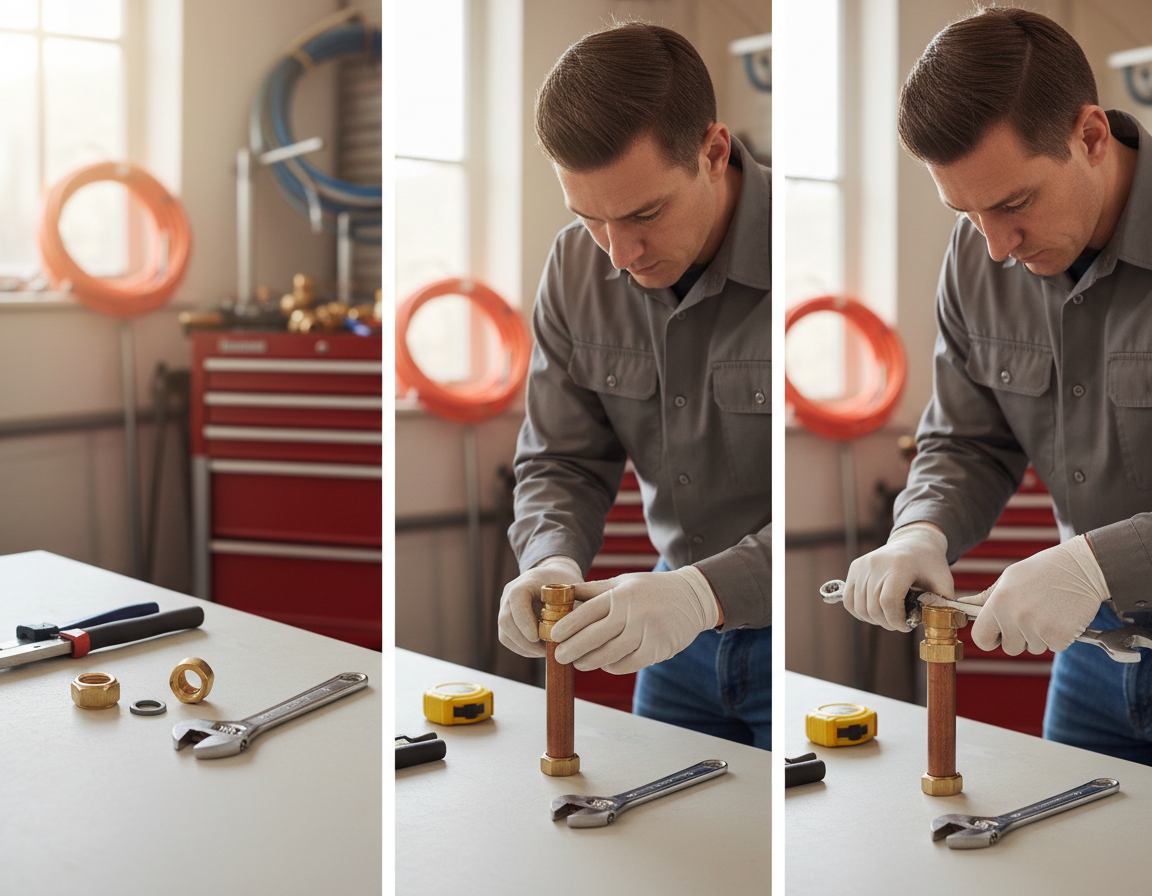
What Is A Compression Outlet Lead Free Brass Max-Adapter?
A specialized connector is used in many systems to join smooth tubing with threaded pipe ports. This component is called a compression outlet lead-free brass max-adapter.
This fitting is a specialized variation of a compression connector. Its primary job is to join a piece of tube to a male threaded pipe, often called an MIP.
Core Function And Design
This component creates a reliable, sealed transition. It connects a smooth tube end directly to a threaded port.
No soldering or flaring is needed during the process. That is one reason many installers prefer it.
The sealing method uses mechanical force to produce a secure joint. The nut and sleeve, often referred to as the ferrule, operate together in the sealing process.
You slide the nut and then the sleeve onto the tube. Next, the end of the tube is pushed into the fitting body.
As the nut tightens, the sleeve is forced against the tube and fitting body. This action grips the tube firmly and creates a watertight seal.
It is suitable for copper, polyethylene, and PEX tube connections. It is a common choice for creating secure water connections.
A significant benefit is that specialized tools are not needed. In most cases, ordinary wrenches are enough for assembly.
Another benefit is easy disassembly. If future service or line modification is needed, you can just loosen the nut.
Compliance And Safety
The body of this adapter is made from a lead-free brass alloy. This is especially important for safety in drinking water systems.
U.S. regulations strictly limit lead content in potable water system components. This fitting complies with those strict requirements.
Lead-free materials help prevent lead from entering the water supply through leaching. This protects human health and the environment.
Older brass alloys contained higher levels of lead. Modern material science has developed excellent alternatives.
These newer alloys preserve the key benefits associated with brass. They continue to offer durability, machinability, and corrosion resistance.
They provide those same benefits without the related health concerns. This represents a major advancement in plumbing safety.
| Feature | Traditional Brass Alloy | Lead-Free Brass Alloy | Primary Benefit |
|---|---|---|---|
| Lead Content | More than 8% (common) | 0.25% weighted average or less | Eliminates leaching risk |
| Use In Potable Water Systems | Restricted or not recommended | Approved for use | Safe for drinking water systems |
| Corrosion Resistance | Good | Excellent (with modern additives) | Longer service life |
| Strength | Strong | Similarly high | Dependable pressure performance |
It is an ideal choice for systems that may need changes later on. Its easy disassembly helps support repairs and future maintenance.
Overall, this adapter is a flexible, safe, and installer-friendly component. It provides a practical and code-compliant solution for difficult connections.
Anatomy Of A Compression Fitting
Every dependable mechanical seal relies on a simple but effective interaction between parts. Understanding this structure is important for proper installation.
A standard compression fitting consists of three main pieces. Those parts are the body, the sleeve, and the nut.
The number of nuts and sleeves always matches the number of connection points on the body. This three-piece design is universal for this type of connection.
Body
The body serves as the main component of the assembly. It is the stationary part that provides the connection points.
Usually made from lead-free material, it includes a tapered internal seat. This tapered seat is where the sealing process takes place.
One side receives the smooth end of a tube. The other side generally features a threaded port to connect with another item.
Its robust construction handles system pressure and provides a stable anchor. Accurate machining in this area is essential for an effective seal.
Sleeve Or Ferrule
The sleeve or ferrule is a compact but very important ring. This piece serves as the primary sealing component in the fitting.
Usually made from brass or a tough polymer, it is placed onto the tubing before tightening. When compressed, it undergoes a controlled deformation.
That movement causes the sleeve to grip the outside of the tube tightly. At the same time, it creates a seal against the body’s tapered seat.
This dual-gripping and sealing function is the heart of the compression connection. A properly manufactured sleeve can resist vibration and repeated temperature changes.
The Nut
During installation, the nut is the piece you turn. It screws onto the external threads of the fitting body.
When tightened, the nut moves forward along the tube. That motion drives the sleeve into the body’s tapered seat.
The compression seal is formed through the force applied here. Proper tightening is essential for achieving a leak-proof seal without damaging the parts.
If necessary, this design can be taken apart with relative ease. You simply loosen the nut to take the joint apart.
Together, these three components create a strong, reliable mechanical joint. The performance and service life of the full compression fitting depend heavily on the quality of each piece.
Our specific adapter utilizes this proven design with high-grade components. That helps provide durability and a dependable seal in plumbing applications.
Standout Features Of Our Brass Max-Adapter
Efficiency on the job site is directly influenced by the clever engineering of the parts you use. This particular connector includes features intended to solve common installer problems.
The benefits are practical, ranging from quicker installs to more convenient servicing later. Let’s explore what makes this product a standout item.
Three-Part Construction
Its construction depends on a straightforward set of three components: the nut, the sleeve, and the body. Every part serves a specific and essential purpose in forming a tight joint.
This efficient approach supports reliable sealing again and again. It also makes inventory simpler because only these three core pieces need to be managed.
No Flaring Equipment Required
A key advantage is that no flaring process is required for the tube. That saves labor time and removes the need to buy a specialized tool.
It also makes successful installation easier for more users. DIY enthusiasts can achieve professional-grade results without advanced training.
Easy Disassembly For Maintenance
The compression mechanism is inherently service-friendly. You can loosen the nut to take the joint apart without damaging the tube.
This makes repairs or future modifications possible without cutting the tubing. If reusing the sleeve, it may be wise to replace it to maintain a dependable seal when reassembling.
This feature drastically reduces system downtime during modifications. This gives the system adaptability that permanent connection methods cannot easily provide.
Together, these features translate to faster project completion and long-term adaptability. The robust lead-free alloy body contributes to the fitting‘s longevity through many cycles.
When practical performance matters in brass compression fittings, this adapter stands out. Installation Parts Supply provides these superior fittings for professionals who value performance and ease.
Technical Specifications And Sizing Guide
This detailed guide provides the exact numbers you need for a compatible and safe installation. Correctly matching your tube and thread requirements to the product is crucial.
Below is a breakdown of the important specifications for this adapter. This information helps you verify compatibility with your setup.
Size Range: Tube OD And Thread Details
The available size range is broad for maximum versatility. It accommodates tube outside diameters from 1/8 inch up to 7/8 inch.
One end connects to the smooth tubing. On the opposite side, it uses a standard Male Iron Pipe (MIP) thread.
These threaded connections conform to the National Pipe Taper (NPT) standard. This ensures a universal fit with other common plumbing components.
| Tube Outside Diameter (OD) | Corresponding Thread Size (NPT) |
|---|---|
| 1/8″ | 1/8″ |
| 1/4″ | 1/4″ |
| 3/8″ | 3/8″ |
| 1/2″ | 1/2″ |
| 5/8″ | 1/2″ |
| 3/4″ | 3/4″ |
| 7/8″ | 3/4″ |
Installation Parts Supply stocks these adapters in the most popular sizes for immediate shipment. Be sure to verify your tube OD before placing an order.
Temperature Range: -40°F To +250°F
This adapter is designed for a broad operating temperature range. It performs reliably from -40 degrees Fahrenheit to +250 degrees Fahrenheit.
This broad range covers nearly all residential and commercial environments. It handles freezing conditions as well as hot water line duties.
That specification demonstrates the stability of the material and the reliability of the connection. It can be trusted in very cold environments as well as high-temperature applications.
Material: Lead-Free Brass Construction
The fitting body is made from a certified lead-free brass alloy. This material makeup plays a critical role in safe operation.
It meets stringent standards like NSF/ANSI 61-G. Those standards apply to components that contact drinking water.
Using lead-free components helps stop contaminants from leaching into the water. This helps protect household health while meeting current U.S. plumbing codes.
This alloy further contributes durability and corrosion protection. This allows the item to provide extended use over time.
In summary, these technical specs define a versatile, safe, and robust connector. With the right size, broad temperature range, and lead-safe brass build, it supports reliable installation.
Applications: Best Uses For This Adapter
A plumbing component shows its worth through the range of tasks it can handle reliably. This connector is designed for many different applications, not just ordinary water lines.
Its robust design allows it to manage different media, including liquids, gases, and fuels. This makes it a go-to item for residential, commercial, and industrial projects.
From residential plumbing to industrial equipment, this fitting offers impressive versatility. Let’s explore the primary systems where this adapter excels.
Potable Water Systems
Delivering safe drinking water is a top priority for any plumbing system. This adapter is an excellent option for that important role.
Its lead-free design complies with health requirements for potable water. This makes it suitable for installation on hot and cold drinking water lines alike.
This fitting works dependably across its wide temperature range. It is often used in houses, apartment complexes, and restaurants.
Whether joining copper or other approved tubing, it supports a secure seal without contamination. That application shows how important the fitting is for safeguarding public health.
Use In Gasoline, Oil, And Vacuum Lines
This adapter is not limited to water-based systems. It is also suitable for systems that handle fuel, oil, and similar hydrocarbons.
The strong material helps resist damage from contact with gasoline and oil. This allows it to be used in fuel delivery lines or lubrication systems for equipment.
This fitting can also provide a dependable seal in vacuum systems. This is useful in laboratory setups or certain HVAC components.
Its mechanical grip helps maintain connection integrity across changing pressures. This level of dependability is critical for safe and effective operation in such applications.
Hydraulic And Pneumatic Applications
In industrial and mechanical environments, this connector serves additional use cases. It frequently appears in low-pressure hydraulic and pneumatic setups.
In machinery, hydraulic systems use fluid to transmit force and power. Pneumatic systems operate similarly but use compressed air.
This type of fitting is ideal for connecting tubing in these control and power networks. It may be used in production machinery or instrumentation panels.
By forming a secure seal, it helps stop leaks that would otherwise reduce performance. For every one of these applications, selecting the proper tube material is a critical next step.
Material Compatibility: Copper, Aluminum, And Plastic Tubing
This fitting is designed to be compatible with several widely used tubing materials. Every type has certain requirements for achieving a proper seal.
Using the correct procedures for your tube material is essential. That helps ensure the joint performs properly under pressure.
Copper Tubing Compatibility
All standard forms of copper pipe are compatible with these fittings. Compatible options include K, L, M, and ACR (Air Conditioning and Refrigeration) copper tubing.
The rigid nature of copper makes it an ideal partner for this connection type. The metal sleeve can grip the outside of the pipe securely.
These applications work best in low-pressure systems that do not experience significant vibration. Always make sure the pipe end is square-cut and deburred to support a proper seal.
Aluminum Tube Applications
This fitting can be used with aluminum tubing, although that is less common in everyday plumbing. Its softer metal construction requires more careful assembly practices.
It is essential to choose the proper sleeve material intended for aluminum use. Overtightening can easily damage the softer tube wall.
Plastic Tubing (With Sleeves And Inserts)
Connections to plastic tubing like PEX or polyethylene require additional specialized parts. A standard metal sleeve is not suitable here.
Using a brass sleeve may cut into the soft plastic, which can result in leaks and connection failure. You must use a Delrin or similar plastic sleeve, often called a 60P sleeve.
More importantly, a stiffening insert is mandatory. That insert, such as a 61P model, fits inside the end of the tube.
It supports the tube internally so it does not collapse under compression. The sleeve then grips the reinforced tube effectively.
When working with larger plastic tubing sizes of 1/2″ OD and above, different connection methods may be preferable. Push-fit or crimp fittings may offer more reliable performance on bigger lines.
Follow this practical advice for a successful installation every time:
- Always match the sleeve material to your tube material. Use metal sleeves for metal tubing and plastic sleeves for plastic.
- Be sure to use a stiffening insert with any non-rigid plastic tube. It is essential if you want a reliable long-term seal.
- Double-check the adapter size against your tube‘s outside diameter before assembly.
You can get the adapter, matching Delrin sleeves, and the needed stiffening inserts from Installation Parts Supply. We provide all the complementary parts to ensure your project’s success from a single, reliable vendor.
Step-By-Step Installation Instructions
Proper installation is the final, critical step that ensures your plumbing fittings perform as designed. Following a clear sequence guarantees a secure, leak-free joint every time.
The following steps apply to copper, aluminum, and correctly prepared plastic lines. Below is a complete walkthrough of the installation process.
Tubing Preparation
The first step is to make a clean and precise cut on the tube. A sharp tube cutter is the best tool for this job.
Rotate the cutter around the pipe so the cut forms evenly. With each rotation, tighten the tool slightly until the tube is cut through.
This approach helps create a square end. A crooked cut will prevent the sleeve from sealing correctly.
Next, clear away any internal burrs created during cutting. This can be done using a reaming tool or a round file.
A smooth interior prevents flow restriction. It also helps the stiffening insert seat properly inside plastic tubing.
Wipe the pipe’s exterior clean. That removes debris or dirt that could affect the seal.
Putting Together The Nut, Sleeve, And Body
Start by getting the three main parts together: the nut, the sleeve, and the fitting body. Make sure the tapered end of the sleeve points toward the body.
Begin by placing the compression nut over the pipe. After that, slide the sleeve onto the pipe behind the nut.
Then push the pipe end into the fitting body. Push it in fully until it reaches the internal stop.
A noticeable resistance should be felt when it is fully seated. Complete insertion is essential for the compression seal to form correctly.
If the connection involves a male iron pipe (mip) thread, first make sure the adapter body is firmly seated in the port.
Tightening Techniques And Torque Tips
Start threading the nut onto the fitting body by hand. Tighten it by hand until it is snug.
Check that the threads are threading smoothly. Cross-threading should be avoided because it can damage the joint.
When hand-tightening is complete, it’s time for the final step. Use an adjustable wrench or pliers for this.
Use a second wrench to hold the fitting body steady. This prevents it from twisting and stressing other connections.
Then tighten the nut using the wrench. For most connections, about a half-turn (1/2) is generally sufficient.
Sometimes another quarter-turn (0.25) is needed. The overall wrench movement should generally stay under three-quarters of a turn.
The seal is created by compression, not extreme force. Too much tightening can deform the sleeve or crush the tube, which may lead to leaks.
Thread sealant such as Teflon tape is not required on these compression fitting threads. Applying one drop of light oil to the nut threads may help smooth assembly.
| Step | Action | Key Tip |
|---|---|---|
| 1. Preparation | Cut the tube square, ream the inside, and clean the exterior. | For the cleanest cut, use a tube cutter. |
| 2. Component Order | Place the nut first, then the sleeve onto the tube. | The tapered side of the sleeve should face the fitting body. |
| 3. Insertion | Push the tube fully into the body until it stops. | Ensure full contact with internal seat. |
| 4. Hand Tighten | Thread nut on by hand until snug. | Verify smooth thread engagement. |
| 5. Wrench Tighten | Apply wrench for final torque. | Most installations require only 1/2 to 3/4 turn. |
| 6. Verification | Check the connection and test for leaks. | Avoid over-tightening; compression creates the seal. |
Following these steps will result in a professional-grade installation. Using this method can minimize future issues and protect long-term system performance.
Keep in mind that proper technique matters just as much as the correct part. Installation Parts Supply provides both the quality components and the knowledge for your success.
Understanding OD Vs. CTS Sizes
Copper tubing is measured using two sizing standards, and understanding the difference is very important. This distinction often causes confusion in plumbing work.
Selecting the wrong sizing standard may cause improper fits and leaks. The following explanation helps make those key terms clear so the right fitting can be selected.
OD (Outside Diameter) Explained
The Outside Diameter is the actual physical measurement across the tube. This dimension is typically measured using a ruler or caliper.
This is the dimension used when specifying compression fitting sizes. The adapter must match the pipe’s exact OD for a proper seal.
You can think of OD as the tube’s true physical size. This is the key number to use when selecting these fittings.
CTS (Copper Tubing Size) Explained
Copper Tubing Size is a traditional nominal sizing standard. It is often referred to as the “nominal” size.
With standard copper water pipe, the CTS measurement is typically about 1/8 inch less than the actual OD. This is an industry convention, not a physical measurement.
As an example, a pipe identified as “1/2-inch CTS” measures 5/8 inch in outside diameter. That distinction is extremely important when selecting parts.
| Tube Outside Diameter (OD) | Copper Tubing Size (CTS) | Common Application Note |
|---|---|---|
| 3/8″ | 1/4″ | Smaller supply lines |
| 1/2″ | 3/8″ | Often used for valves |
| 5/8″ | 1/2″ | Standard water line |
| 3/4″ | 5/8″ | Larger supply runs |
| 7/8″ | 3/4″ | Main lines, some appliances |
Common Size References For Plumbing
When buying a brass adapter, the listed size refers to the tube OD it is designed to accept. That measurement does not refer to CTS sizing.
For instance, a standard 1/2″ nominal copper water line has a 5/8″ OD. You need a connector listed for 5/8″ OD, not 1/2″.
Installation Parts Supply labels its product line by tube OD. This helps eliminate guesswork and improves compatibility.
Always identify your tube type and measure its outside diameter. Doing this can prevent common installation errors.
A connection to a male iron pipe thread (MIP) requires the right adapter. The tube end needs to seat tightly inside the compression body.
Correct OD matching allows the sleeve to hold the tubing as intended. A correct grip is essential for forming a watertight connection.
This knowledge is essential for a successful, leak-free installation. Always check sizes before completing the final connection.
Why Lead-Free Brass Matters For Potable Water
If a fitting is used with drinking water, what it is made of is just as important as how well it performs. Modern plumbing codes reflect that concern by requiring safer materials to protect health.
Certified lead-free alloy components have become standard practice for important reasons. This approach offers a powerful combination of safety, durability, and regulatory compliance.
The advantages extend from the tap in your home to the broader environment. Choosing the right material is a responsible decision with long-term positive effects.
Health And Environmental Benefits
Older brass alloys included some lead to make machining easier. Over time, this lead could leach into the water flowing through the system.
Low-level exposure still presents meaningful health risks, especially for children. It may interfere with neurological development and lead to other long-term problems.
Choosing lead-free brass helps eliminate the contamination problem from the start. As a result, the water is better protected for household use.
There are environmental benefits as well. It reduces the amount of lead entering wastewater streams and ecosystems.
Safer manufacturing and recycling processes are additional pluses. The entire product lifecycle becomes more sustainable.
Meeting US Plumbing Standards
In the United States, strict laws govern materials for drinking water systems. These regulations are built on the framework of the Safe Drinking Water Act.
Specific certifications like NSF/ANSI 61, Section 9 are crucial. These certifications verify that the lead content stays within the permitted safe threshold.
All brass compression fittings supplied by Installation Parts Supply meet these rigorous standards. You can use them for potable water with full confidence.
This compliance is not optional for professional installations. It is required in order to protect health and satisfy inspection standards.
Our products carry the necessary certifications for your peace of mind. We ensure every component is up to code.
Durability And Corrosion Resistance
Beyond safety, this modern alloy offers exceptional physical properties. It offers very good resistance to corrosion and scale buildup.
This helps the fittings preserve their integrity over time, even in difficult water conditions. This leads to a dependable, long-term connection.
The material performs well across a broad range of pressures and temperatures. It won’t degrade or become brittle over time.
Its advantages become clear when compared with common alternatives. The table below outlines some of the key differences.
| Material | Key Advantage | Typical Use Case | Consideration for Potable Water |
|---|---|---|---|
| Lead-Free Brass | Excellent strength and temperature tolerance | Hot/Cold water lines, Hydraulic connections | Fully approved and safe; ideal choice. |
| Plastic (e.g., PVC) | Low cost & chemical resistance | Drain systems and irrigation | Not for hot water; can impart taste. |
| Carbon Steel | Very high pressure rating | Industrial gas lines | Prone to rust; not suitable for water. |
While the initial cost may be slightly higher than plastic, the value is undeniable. Its long-term safety, reliability, and lifespan offer excellent overall value.
Choosing certified free brass components is a future-proof decision for any project. This supports health protection today and long-lasting performance in the future.
Installation Parts Supply is committed to providing these high-quality, code-compliant solutions. We help customers create systems that are durable and safe.
Why Installation Parts Supply Is Your Best Choice
When it comes to plumbing installations, choosing the right supplier is almost as important as choosing the right fittings. The supplier behind the product determines its reliability, availability, and the support you receive.
Installation Parts Supply has earned its place as a premier wholesale distributor for good reason. We build our reputation on a foundation of quality, value, and exceptional service for every customer.
We do more than just provide parts. We partner with you to ensure your project’s success from start to finish.
Quality Assurance And Product Sourcing
Every item in our inventory undergoes rigorous verification. We source exclusively from reputable manufacturers known for their high standards.
That means every compression fitting and adapter meets or surpasses industry requirements. You get components designed for long-term durability and code compliance.
For example, our lead-free brass products include official ratings such as NSF/ANSI 61-G. This ensures they are safe for potable water applications.
We also provide all necessary complementary parts. This includes the correct sleeve for your tube type and stiffening inserts for plastic tubing.
Competitive Pricing And Availability
Installation Parts Supply believes in offering true value. Our pricing model supports strong quality without unnecessary premium pricing.
We keep a broad in-stock inventory of the most common sizes and types. Our inventory covers connectors for copper, plastic, and other forms of tubing.
Whether you need a standard 1/2″ mip adapter or a specialized item, chances are we have it in stock and ready to ship. This reduces project delays and keeps your work on schedule.
Our logistics network helps ensure fast delivery to job sites nationwide. That means you get the parts you need when you need them.
Expert Guidance And Service
Our trained staff is ready to answer technical questions. We understand the nuances of compression connections and thread standards.
Our staff can help you choose the right product for your exact application. We offer guidance on proper installation techniques to avoid leaks.
This support covers everything from nut torque to choosing between mip and other threads. We help make sure you have the knowledge needed for a successful end result.
Customer service is a core priority at Installation Parts Supply. Our team can assist with ordering, tracking, and any questions after the purchase.
| Supplier Attribute | Typical Hardware Store | Online Marketplaces | Installation Parts Supply |
|---|---|---|---|
| Quality Assurance | Varies; mixed brands | Unverified; risk of counterfeits | Strict; sourced from trusted manufacturers |
| Price Competitiveness | Retail markup | Low price, but hidden costs | Wholesale value with fair, consistent pricing |
| Product Availability | Limited common sizes | Long shipping times | Large in-stock inventory |
| Technical Expertise | Basic general knowledge | Minimal to none | Specialized plumbing and fitting support |
| Code Compliance | Not guaranteed | Often unclear | Fully documented and certified |
As shown, we provide a balanced, professional-grade solution. Customers benefit from dependable product ratings and clear performance data on every order.
We serve as a one-stop source for all your compression fittings requirements. From the adapter to sleeves, inserts, and tools, we carry everything you need.
Choose Installation Parts Supply for your next project. See the difference a focused, customer-first supplier can make.
Conclusion: Reliable Plumbing Solutions
For any plumbing professional or DIY enthusiast, achieving a leak-free system is the ultimate goal. A properly selected adapter supports both safety and durability across water, gas, and air lines.
This product features lead-free construction to support potable water safety. The strong design allows it to manage various fluids and makes installation easier.
Always match the outside diameter of the tube and follow proper installation techniques. A proper fit helps prevent leaks at every connection end. Make sure the tube end is prepared correctly.
These guidelines apply to plastic tubing and other tube materials. Always use the proper sleeve with plastic lines.
When working with male iron pipe (mip) threads, make sure the seal is secure. Make sure the mip connection is firmly secured. The compression mechanism creates a reliable joint.
Installation Parts Supply supplies this essential item along with all required supporting parts. Explore our full product selection for your next project.
Investing in high-quality components guarantees system longevity and peace of mind. It is a wise decision for any properly executed job.
Related: Why a 1/4 Tee Is Essential for Reverse Osmosis Installations