
Throughout the country, many homeowners overlook the hidden value of their lower levels. Thoughtful finishing can significantly enhance both space and comfort. This transformation happens minus the high cost of constructing extensions to the main floor.
Our experts lead you from the initial idea to the final touch. The crew is expert in cellar conversions and provides innovative design ideas – See it here about basement remodeling. Examples are entertainment centers, in-law apartments, fitness areas, and offices.
Industry figures indicate that completing a lower level can recover approximately 70% of the investment in increased home value. Citing data from the NAR. Furthermore, HomeAdvisor notes that lower level remodels are significantly more affordable on a square footage basis than building new structures.
Before you pick out paint or flooring, it is crucial to evaluate dampness levels, structural integrity, and municipal regulations. Early evaluations help you dodge costly rework and secure your budget throughout the renovation.
By unlocking your basement’s full capacity, you can build an area that is practical yet elegant. This will not merely satisfy your requirements but effectively increase your home’s equity.
Reasons To Invest In Basement Finishing
Turning a cellar into functional rooms is a savvy investment. It turns wasted square footage into zones the family will enjoy daily. A thoughtfully designed renovation increases your home’s size without building outward. It avoids zoning issues and offers versatile uses like a guest suite, workspace, or play area. Even small changes can significantly enhance your lifestyle.
Increase Living Space Without Adding On
Finishing your basement creates more room keeping the home’s structure the same. This method keeps your yard and foundation intact while gaining bedrooms, a family room, or storage. It represents a budget-friendly way to skip the hassles of constructing new wings.
Return On Investment And Resale Value
A well-done basement remodel improves property desirability and use. The National Association of Realtors suggests that remodeled lower levels get back approximately 70 percent of the renovation expense in home value. Consider the long-term benefits when evaluating the budget of a basement remodel.
| Project Type | Typical Cost Range | Value Recouped | Ideal Function |
|---|---|---|---|
| Standard finish | $10,000 – $30,000 | 60% – 75% | Recreation, storage, washroom |
| Mid-range remodel with bath | $30,000 – $60,000 | 65% – 80% | Bedroom, rental unit |
| High-end finish with systems upgrade | $60,000 – $120,000+ | 70% – 85% | Media room, master suite |
Thermal Efficiency And Acoustic Privacy
Updating the lower level is the perfect time to improve insulation, windows, and heating and cooling. This can lead to cheaper monthly expenses. Proper waterproofing and insulation also fix foundation and plumbing risks, making the space more comfortable. Lower levels offer natural soundproofing, rendering them suitable for sound-intensive uses such as fitness centers or theaters.
Consider the long-term savings in energy and reduced repair needs when looking at the expense of a renovation. Strategic updates during finishing preserve the home and boost livability. They also make the home more desirable to the market.
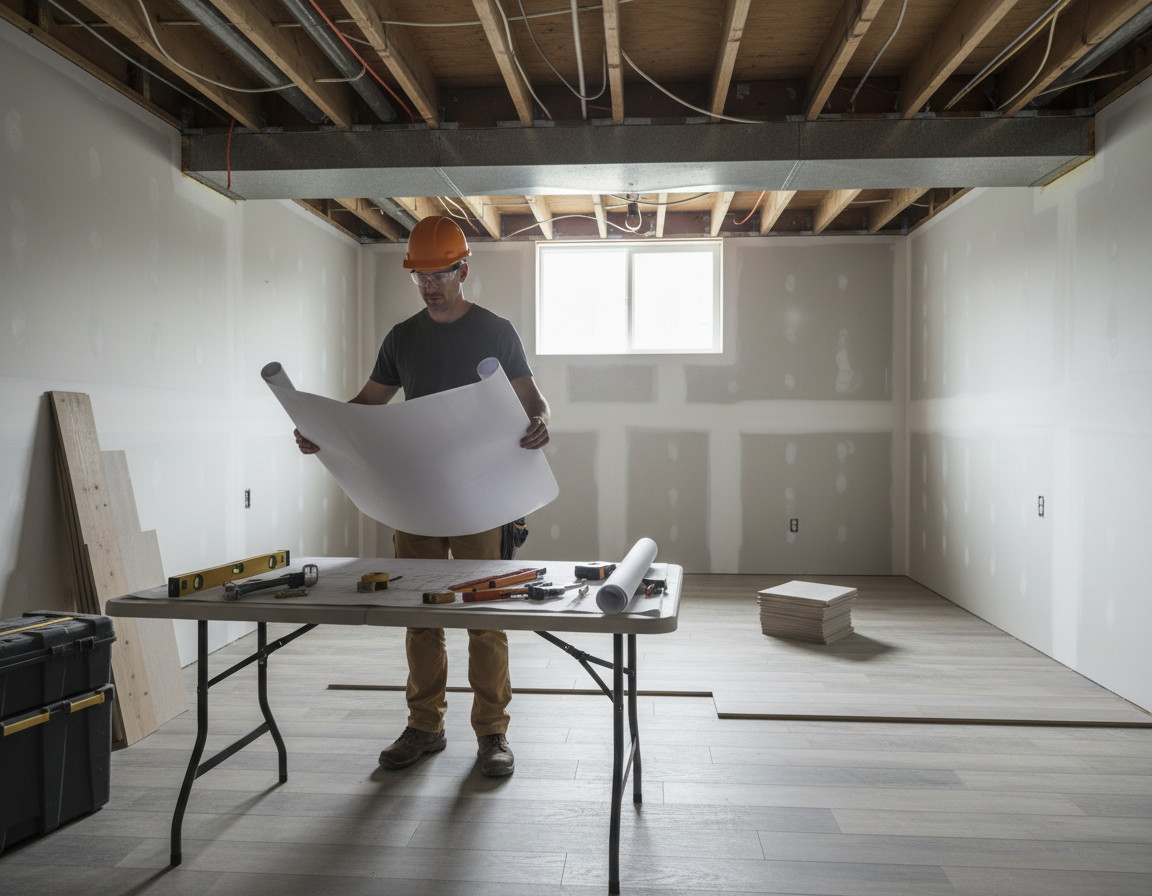
Essential Checks Before Starting Your Remodel
Before you begin, make a comprehensive plan. A well-planned approach can save you money and prevent delays. Begin by assessing the current state of the space, confirming security, and complying with laws. These factors dictate the finished project.
Dampness mitigation is mandatory before any finishing work. Check for seepage, examine the drain tiles, and ensure pump operation. Add moisture barriers and air drying units as needed. Postpone hanging sheetrock and final touches before water problems are cured.
It is vital to schedule a radon test at the start. Fixing radon issues is less invasive prior to closing up walls. During this phase, locate mechanicals like the heating and hot water units. Ensure they are accessible or properly boxed in with safety alarms.
Check municipal regulations and licensing needs. Sleeping rooms require egress, therefore design for emergency exits or other ways out. A skilled contractor will handle permits and make sure you conform with regulations.
Have a professional check the structural base and beams and posts. Fix foundation problems before making it look good. Now is the moment to add better insulation and plan for utility lines. This will enhance livability and energy use.
When selecting a contractor, inquire about their history with cellar conversions. Ask about their approach to moisture control, radon testing, meeting regulations, and emergency exits. Transparent requirements at the outset stop unexpected issues later.
Basement Remodeling: Design Ideas And Layouts
A well-planned basement contributes useful square footage and elegance. First, imagine your lifestyle needs downstairs. Effective designs balance utility, coziness, and durable finishes for lasting results.
Media Rooms And Cinema Designs
Design a media center with stadium-style chairs, a high-def projector or large screen, and multi-channel audio. Use sound-dampening materials, sound clips, and thick batting to prevent noise bleeding. Choose plush carpet or vinyl flooring depending on dampness. Built-in shelving, power outlets, and adjustable can lights keep snacks and devices handy without ruining the vibe.
Living Areas, Game Rooms, And Children’s Zones
Convert part of the basement into a comfortable den with flexible furniture and durable flooring like LVP or modular carpet. Define play zones with mats, low bookcases, and bins that fit children’s reach. Add washable paint or creative wall spaces to allow for drawing. A flexible layout makes it easy to change from movie nights to homework time.
Remote Work And Hobby Areas
Create a focused workspace by using built-in storage, supportive seating, and good illumination for productivity. For creative studios, use noise control and light-blocking shades for screen visibility. Lower levels are great for sound isolation, creating the best spot for jam sessions, broadcasting, or creating a distraction-free home office space.
Personal Gym And Training Spaces
Plan a home gym with rubber flooring tiles or foam tiles to cover the floor and reduce shock. Wall mirrors make the room look bigger and aid in exercise form. Prioritize ventilation with air extraction or air purifier and think about acoustic treatments to avoid disturbing other rooms. Ensure ample room for exercises and storage for equipment – Visit the website about basement remodeling.
Wet Bar, Kitchenette, And Guest Suite Options
Add a beverage station with a mini-refrigerator, bar basin, and a minimum of 4ft of counter space for serving. A mini-kitchen with a two-burner range and microwave adds convenience for longer stays. In an in-law apartment, add a bathroom and compact toilets and sinks. On-demand water units save room while supplying steady hot water for visitors.
Illumination Strategies For Lower Levels
Lower level remodeling needs to solve low light with varied illumination: can lights, task lamps, and mood lighting. Choose light-reflecting colors and hang reflective glass across from natural light or egress openings to boost natural light. Smart lighting systems can automate scenes for a movie room or lounge and adjust color temperature for reading in a workspace.
| Purpose | Essentials | Suggested Surface |
|---|---|---|
| Cinema | Soundproofing, mood lights, riser seats, power | Plush carpet or LVP |
| Living area / Kids zone | Durable surfaces, low storage cubbies, washable wall finishes | Luxury vinyl plank or carpet tiles |
| Home office / Studio | Built-in storage, ergonomic desk, sound treatment, stage lighting for studios | Wood flooring or vinyl plank |
| Workout area | Rubber flooring, reflective glass, airflow, shock absorption | Rubber flooring |
| Hospitality area | Under-counter fridge, sink, counter space, bathroom or tankless heater | Porcelain tile or LVP |
| Illumination & Decor | Ambient/task lights, smart switches, light paint, mirrors | Zone specific; select water-safe materials |
Selecting Builders, Finishes, And Budgeting For Renovations
Making a comprehensive roadmap is vital before choosing a team and materials. Begin by collecting estimates and confirming legal status and liability. You need to select builders with a proven track record in lower level finishing and community feedback. Companies like Renovate Builders can manage the entire process, from start to finish.
How to select the best basement remodelers
Ask to see past work and speak to past customers from completed jobs. Verify that the builder understands building codes and manages required paperwork. Choose companies who specialize in waterproofing, emergency exits, and gas safety. A detailed scope of work, including timelines and payment plans, must be agreed upon.
Estimating costs and budgeting tips
Prices differ depending on project size. Simple updates like cosmetics are more affordable than building washrooms or moving walls. Get several quotes and look at industry prices. Set aside 10 to 20% of your money for unexpected expenses like water damage or structural issues.
Best finishes for damp environments
Choose waterproof floors like LVP or ceramic tiling over hardwood. Where moisture is a risk, use mold-resistant drywall or cement board. For plumbing zones, pick tiled walls and waterproof counters. Remember to include a sump pump and moisture remover to safeguard materials.
Managing the project schedule and legalities
Schedule checks and subcontractors to minimize downtime. The typical sequence involves waterproofing and structural work, then comes wiring and plumbing, finally surfaces and trim. Verify who pulls the permits and track approvals to prevent hold-ups.
Adhere to these tips to keep finances in check and locate a good pro. Review product options and financial advice to guarantee the renovation is functional and long-lasting.
How To Remodel Successfully And Avoid Traps
Thorough strategy is key to a successful basement renovation. Commence by looking for water intrusion and checking air circulation before buying decor. Finding problems soon and solving these faults cuts costs and anxiety.
Don’t Ignore Moisture And Ventilation
Address leaks and set up water management before starting on finishes. Moisture remediation is critical to avoid fungal growth and ensure the longevity of finishes. Use a drying unit and a dedicated ventilation strategy to keep air dry.
Combat The Low Ceiling Feeling
For rooms with low overhead, paint them white and choose can lights instead of pendants. Bright hues, upright stripes, and reflective glass make it seem like of more height.
Smart Illumination And Heating Plans
Use a blend of general, focused, and mood lights to stop it feeling like a dungeon. Plan for HVAC extension or extra heaters to ensure comfort and air quality. Think about space-saving units like tankless water heaters for tight spaces.
Design Storage Solutions From The Start
Design cabinetry into the design to avoid clutter. Fixed furniture and under-stair solutions keep the room airy increasing worth to the house.
Choose Materials For Real Life
Choose surfaces that resist abuse, accidents, and dampness. Go for strong options like luxury vinyl, ceramic flooring, rubber gym tiles, and mold-resistant drywall. For areas prone to mess, consider carpet tiles or soft tiling. Bar areas need waterproof tops and durable cabinets.
| Error | Practical Fix | Ideal Choices |
|---|---|---|
| Hidden leaks after finishing | Fix all water issues, drainage systems, pumps | Tanking slurry, treated gypsum |
| Humid atmosphere | Install ventilation, use dehumidifiers, extend HVAC ducts | HVAC units, air exchangers |
| Claustrophobic low height | Use recessed lighting, white ceilings, vertical accents | Flush fixtures, low-profile trim |
| Disorganized space | Design built-ins and under-stair storage early | Tailored joinery, solid racks |
| Materials that fail quickly | Pick basement-grade, durable items | Vinyl, ceramic, rubber, waterproof paint |
Final Thoughts
Basement remodeling offers a cost-effective way to expand your home, with adaptable plans and great ROI. A thoughtful project converts wasted area into a media room, gym, office, or in-law apartment. It boosts daily living while also raises the home’s worth.
Begin by addressing moisture issues, testing for radon, and assessing the structure and HVAC and plumbing. When preliminaries are finished, get required licenses, add padding, and select finishes that handle humidity. These steps prevent costly rework and keep the renovation on schedule.
Select products that are durable and resistant to moisture, and use layered lighting to combat the problem of limited height. Create distinct areas to get the most out of the area. Collaborate with experienced professionals, such as Renovate Builders, to deal with paperwork, schedules, and construction details. Begin with a full check and a comprehensive strategy. This way, your basement evolves into a lively, useful part of your property, reflecting your style and adding both space and value.
Related: Home Remodeling Kirkland for Multigenerational Living